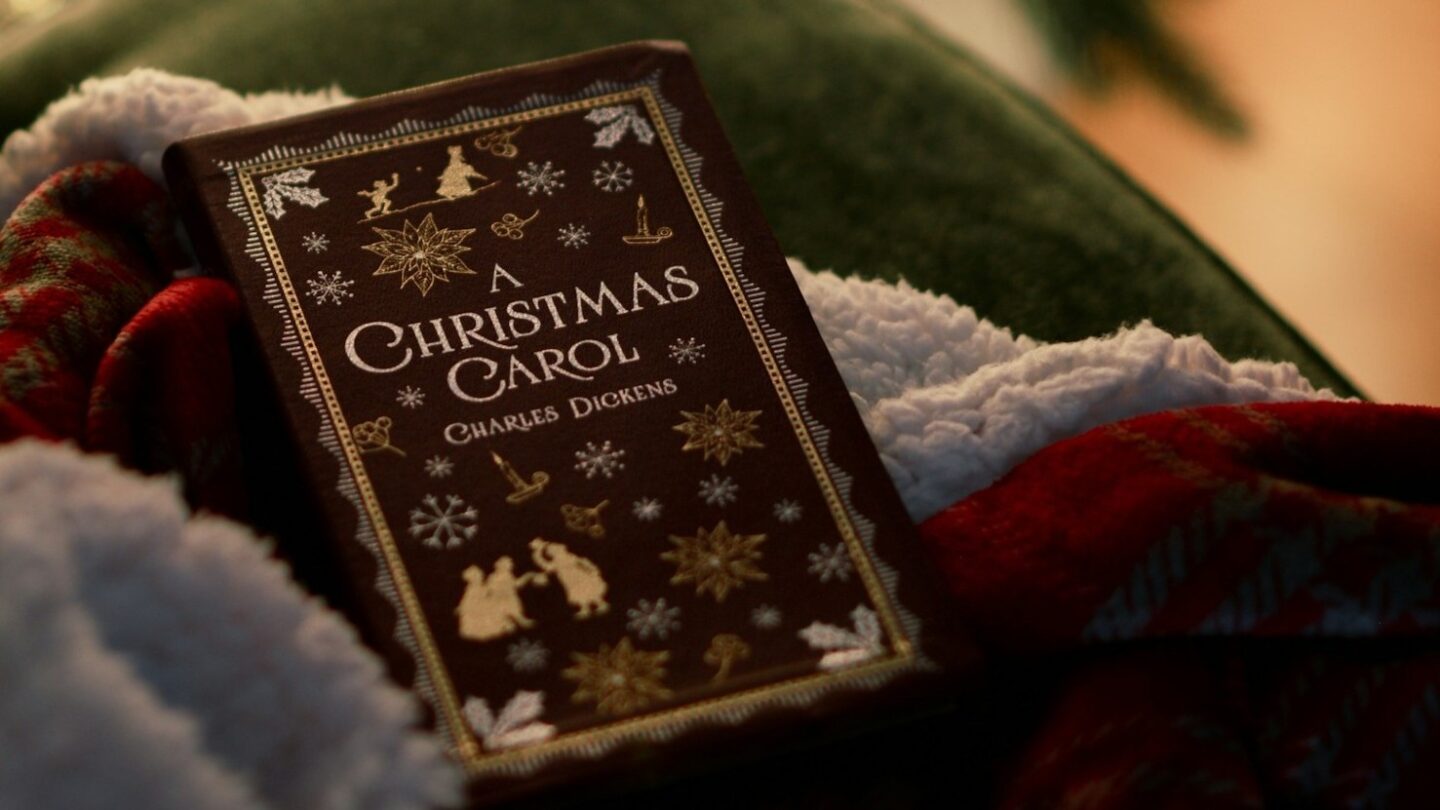
If I had to pick the most famous Christmas fairy tale of all time, the answer is abundantly obvious: A Christmas Carol by Charles Dickins. Calling this story a fairy tale might be a stretch, but not a big one in my opinion. Dickins himself described A Christmas Carol as “a ghost story of Christmas,” and the tale is supernatural, dark, and wondrous in a way that fits right into the fairy tale genre.
Those of you familiar with this story have probably seen at least one of the many, MANY movie adaptations. But if you’ve never read the original novella penned in 1843, I’d highly encourage you to check it out. A Christmas Carol is in the public domain, so it’s very easy to find. Also it’s a bite-sized little Christmas snack. You’ll likely read it in one sitting, and it’ll definitely put you in the Christmas spirit to read the heartwarming character arc of Ebenezer Scrooge this season.
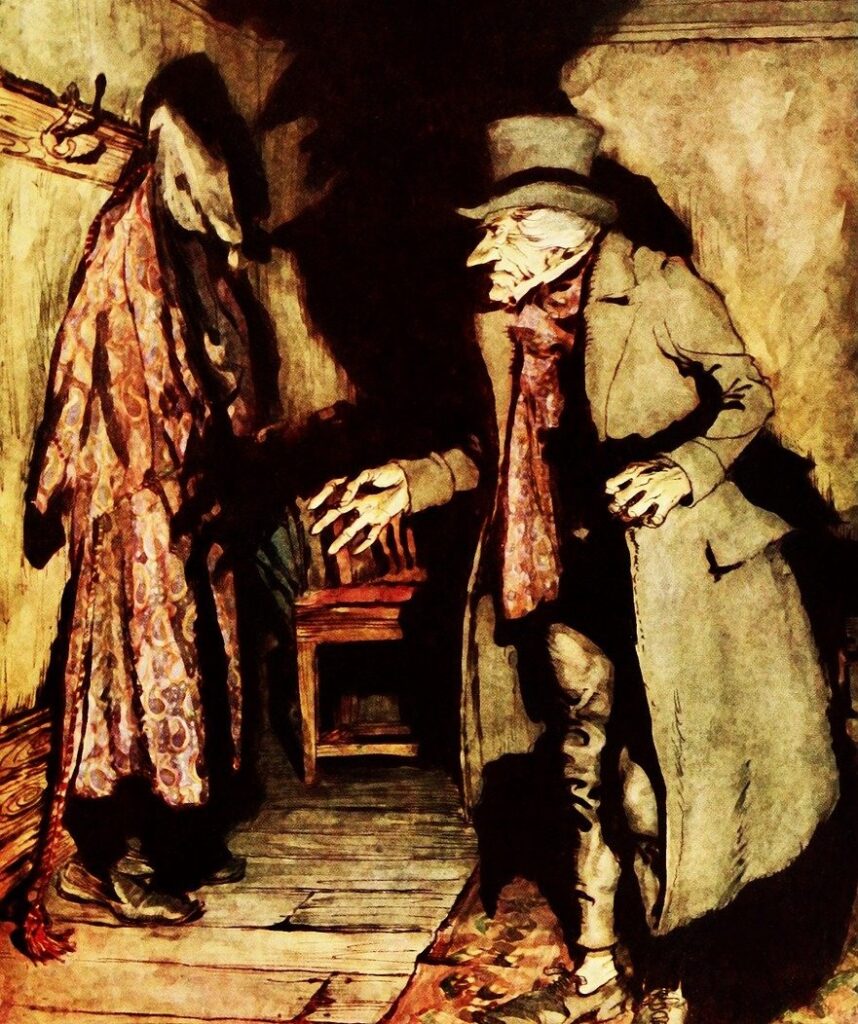
I’m Not Gonna Lie: Christmas Carol is Super Macabre
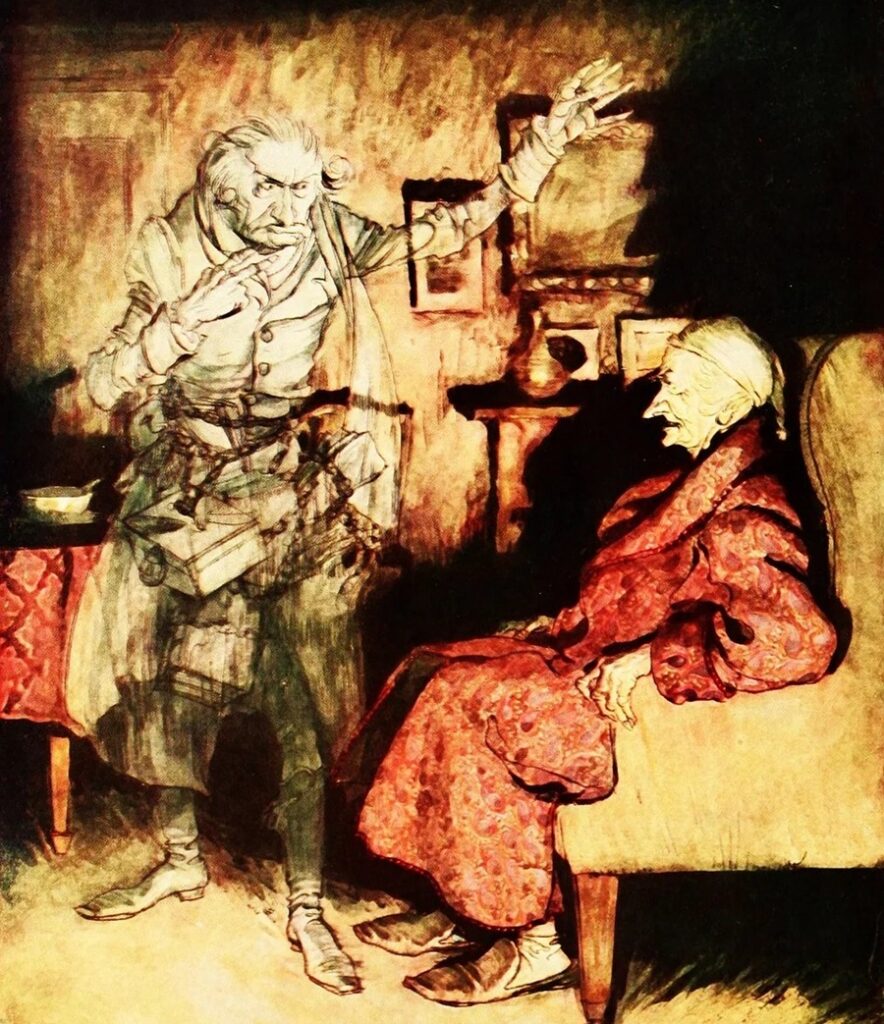
The original even more so than the movies you grew up with. I personally prefer the Muppets’ version of A Christmas Carol, and even that version gets dark and scary in all the right places. But the original is . . . something else. Sure, Scrooge gets haunted by his dead business partner and three Christmas spirits. But there’s much more death and darkness in the original story than people realize. For being such a fantastical tale, Christmas Carol dives pretty deep into the harsh realities of human suffering, the inevitability of death, and also the tender human experiences of what really matters in life.
This book is one of the most famous stories in the English language for a reason, and we all should read it at some point in our lives. If I haven’t convinced you yet to pick it up, here are some facts about A Christmas Carol and its author that you probably didn’t know.
12 Little-Known Facts about A Christmas Carol
1. Charles Dickins Wrote It in 6 Weeks
That’s right. Dickins CRANKED out this famous story, starting it in October and finishing it by the end of November. It was published just in time for the Christmas season, which certainly contributed to its immediate success. More on that later . . .
2. This Story Is a Social Commentary on Poverty
Dickins wrote A Christmas Carol with a clear agenda in mind: to bring awareness to the impoverished working class of England. Keep in mind that this was during the height of the Industrial Revolution, and most British people were blissfully unaware of the harsh working conditions, child labor, starvation, and death that happened every day in big cities like London. Dickins had personal experience with these unfortunate realities. He originally planned to write a pamphlet about poverty, but instead he fictionalized these issues in a Christmas ghost story. Definitely a better choice, Charles.
3. Dickins Experienced Poverty as a Child
The Dickins family was solidly middle class, so Charles Dickins received a good education quite young. But this all changed when his father, John Dickins, ended up in debtors prison. Most of the family joined John in prison, but Charles, the oldest son, was pulled out of school at just twelve years old and sent to work at a factory. He spent 10-hour days putting labels on jars of shoe black. These three years of horrible conditions had a huge impact on Charles Dickins, and he included many autobiographical details of his experiences with child labor in his novels Great Expectations and David Copperfield. His strong views on poverty also made their way into A Christmas Carol.
4. Scrooge Has a Little Sister Based on Dickins’s Real Sister
In the original Christmas Carol, Scrooge has a beloved little sister named Fan (Frances), who’s the one person he truly loved. Sadly, Fan dies young, but she is the mother of Scrooge’s lovely nephew, Fred, who is an important character in just about all versions of A Christmas Carol. Apparently Scrooge’s sister was based on Dickins’s real older sister. Frances Dickins was a talented musician who also died tragically young from tuberculosis. She also had a crippled son, who allegedly inspired the creation of Tiny Tim.
5. Instead of Chapters, A Christmas Carol is Divided into Staves
This story is a carol, right? A piece of music. So Dickins wrote his story in staves (as in the five-line musical staff) rather than chapters. Christmas Carol has five staves, basically five distinct acts that follow Scrooge’s growth and redemption. It’s a simple but impactful structure. Like any good Christmas carol, this story was meant to be short, memorable, and repeated often every year. Charles Dickins knew what he was doing.
6. The Ghost of Christmas Past is a Candle
Strange, but true. Of all the ghosts that Scrooge meets, the Ghost of Christmas Past is both the most paradoxical and the most bizarre. Dickins describes this ghost as both a child and an old man simultaneously. According to the text, “from the crown of its head there sprung a bright clear jet of light . . . which was doubtless the occasion of its using, in its duller moments, a great extinguisher for a cap, which it now held under its arm.” When the visions of the past become too much for Scrooge to bear, he banishes the Ghost of Christmas Past by snuffing the spirit with its own extinguisher hat. Rude.
7. The Ghost of Christmas Present’s Robe Hides Something Shocking . . .
The Ghost of Christmas Present is actually the least scary of all the spirits in this book. This “jolly giant” is downright Santa Claus-like with his jovial demeanor, flowing locks, and robe lined with white fur. It isn’t until the spirit is about to leave that he reveals something truly horrifying to Scrooge. The ghost parts his robe to reveal two starved emaciated children hiding under the garment. He says their names are Ignorance and Want, and these two children belong to all of humanity. The metaphor is pretty impossible to miss. Still, this part of the story gives me the willies every time. Eek!
8. The Ghost of Christmas Yet to Come Shows Scrooge His Own Deathbed
Interestingly, modern depictions of the Ghost of Christmas Yet to Come are the most consistent with the original text. This spirit is a dark, hooded figure shrouded in mist and gloom who doesn’t speak a word. In the climax of the story, the ghost shows Scrooge his tombstone, revealing that Scrooge’s own death was what brought such glee to the town. But one scene that doesn’t usually make it into the movies is when the ghost takes Scrooge to see his own dead body. The corpse is covered in a shroud, and Scrooge is too freaked out to move the sheet and see the dead man underneath. So even in the original story, he doesn’t get the full picture until the graveyard scene. But still, taking a man to see his own dead corpse? This Ghost of Christmas Yet to Come is not messing around.
9. The Resolution in the Book is More Private than in the Films
Lots of Christmas Carol movies end with Scrooge bringing together the entire town, showering everyone with gifts, and personally delivering the prize turkey to Bob Cratchit’s family. The original story is much more subtle. Scrooge has the turkey delivered anonymously to the Cratchit family, and it isn’t until Bob returns to work the next day that Scrooge makes amends, raises Bob’s salary, and promises to help the Cratchit family. It’s a heartwarming ending without being over the top, and it also makes Scrooge’s personal transformation feel far, far more genuine.
10. A Christmas Carol Was an Overnight Success
The original print run of 6,000 copies sold out by Christmas Eve, and apparently the novella was reprinted thirteen times in its first year. A Christmas Carol went on to sell over two million copies in its first 100 years and continues to sell today. But sadly Charles Dickins made very little money from this famous project. Apparently he was extremely particular about the quality of his book binding. The publishing costs of Christmas Carol were so high that it made hardly any profit at all. Still, it’s impossible to deny the story’s enduring success.
11. There Are Countless Christmas Carol Adaptations
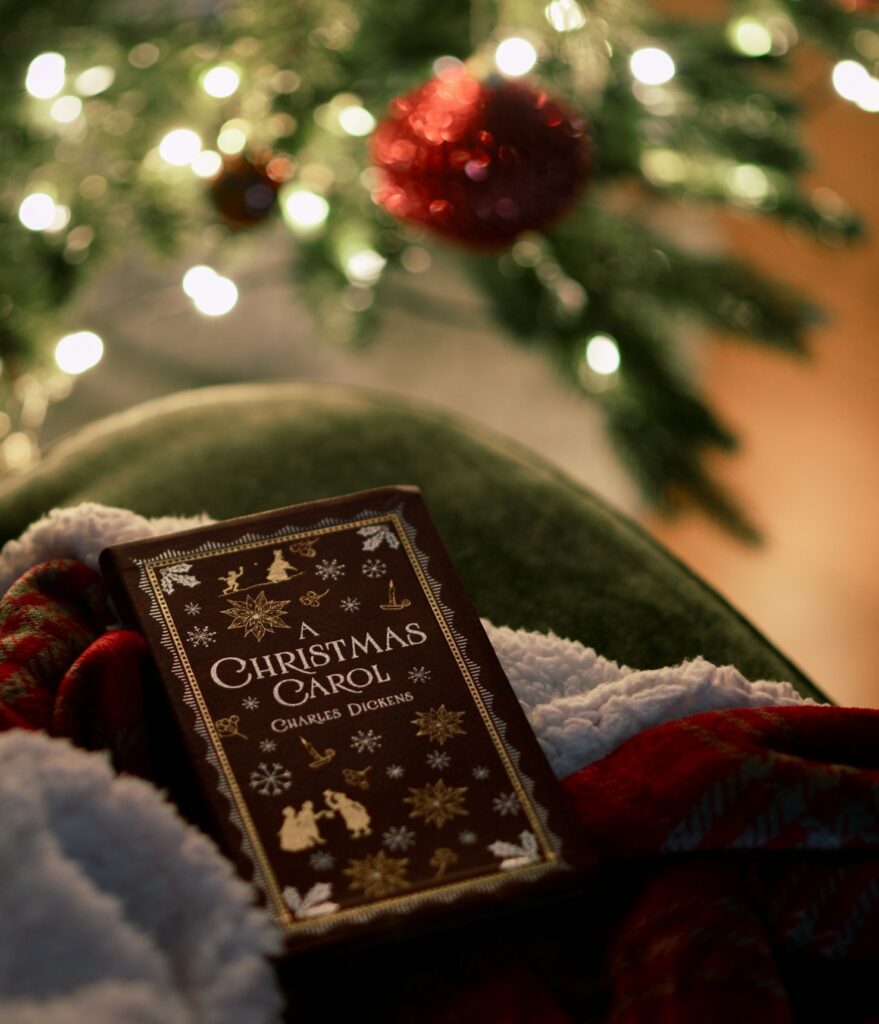
When I say this story is prolific, I mean that it’s inspired over 100 film adaptations alone. And that’s not counting the TV specials, literary spin-offs, and many onstage versions that have sprung up to retell Dickins’s timeless story. The concept of a jaded, curmudgeonly character becoming more generous and more caring through the help of ghostly visitors has become a trope that we’re all familiar with. And honestly, what’s not to love about that story? It’s got a little bit of everything: fantasy, history, social justice, light-hearted family joy, dark thrills, and even a hint of romance. And the ghosts of course. It’s not A Christmas Carol without ghosts.
12. Christmas Carol Originated the Phrase “Merry Christmas”
Though it’s more common in Europe to use the greeting “Happy Christmas” around the holidays, Christmas Carol is where we get the merry Christmas greeting widely used this time of year, especially in North America. Nephew Fred’s very first line is, “A merry Christmas, uncle! God save you.” And I say the same to all of you out there as we celebrate this festive time of year. A very merry Christmas to all! ❧